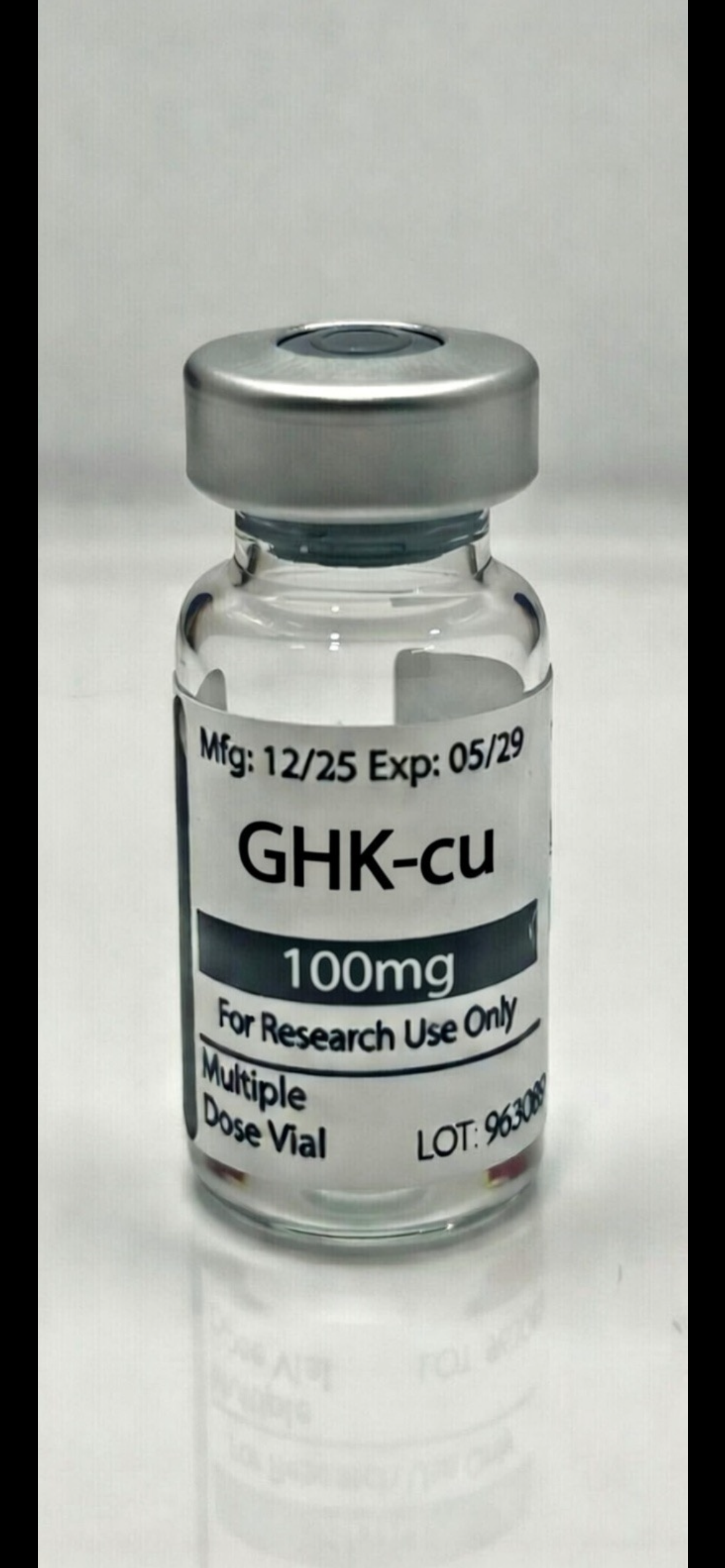
GHK-Cu 100mg Vial
Research Grade Peptide Solution
$55.00$25.00
GHK-Cu (glycyl-L-histidyl-L-lysine copper complex) is a naturally occurring tripeptide-copper complex found in human plasma that declines with age. It acts as a signaling molecule, binding copper ions to enhance bioavailability and exert regenerative effects. GHK-Cu has been studied for over 40 years, primarily in preclinical (in vitro/animal) models, with some human clinical trials (mostly small-scale or topical for cosmetics). As of January 31, 2026, it is not FDA-approved as a drug for any indication but is widely used in topical skincare, serums, creams, and some injectable formulations in regenerative/aesthetic medicine. Evidence is strongest for skin applications, with promising but limited data elsewhere.
Key Potential Benefits (From Preclinical, In Vitro, and Available Human Data)
Skin Rejuvenation and Anti-Aging
Stimulates collagen and elastin synthesis (up to ~70% increase in lab studies on fibroblasts; supports glycosaminoglycan production for hydration).
Improves skin firmness, elasticity, density, and thickness (clinical trials: 20-30% firmness gains after 12 weeks topical use; reduced laxity, fine lines, wrinkles, and photodamage in women with photoaging).
Enhances skin remodeling, reduces hyperpigmentation, and improves overall texture/clarity (e.g., better than placebo or vitamin K in eye-area trials).
Antioxidant and anti-inflammatory effects help protect against free radical damage and modulate inflammation.
Wound Healing and Tissue Repair
Accelerates wound closure, contraction, granulation tissue formation, and re-epithelialization (strong in animal models; attracts immune/endothelial cells, promotes angiogenesis).
Supports recovery after procedures (e.g., microneedling, lasers, peels) and may reduce scarring.
Promising in models of diabetic wounds or radiation-damaged skin (restores fibroblast vitality).
Hair Growth and Scalp Health
Promotes follicle stimulation, increases hair thickness/diameter, prolongs anagen (growth) phase, and improves scalp coverage (some clinical reports in androgenetic alopecia show notable improvements in hair count and density).
Enhances blood flow and reduces inflammation around follicles.
Anti-Inflammatory and Antioxidant Effects
Reduces pro-inflammatory cytokines (e.g., TNF-α, IL-6, IL-1β) and oxidative stress.
Emerging preclinical data: Alleviates symptoms in models of colitis/ulcerative colitis (reduced edema, improved mucosal repair); potential broader tissue protection (e.g., gene expression reset toward youthful patterns in aged cells, supporting DNA repair pathways).
Other Emerging/Speculative Benefits
Potential gene-modulating effects (influences hundreds of genes related to repair, remodeling, and anti-aging).
Exploratory roles in vascular repair, systemic regeneration, or adjunctive use in regenerative protocols (e.g., injections for broader effects, though human evidence is limited).
These benefits arise from GHK-Cu's mechanisms: copper-mediated enzyme activation (e.g., for collagen cross-linking), upregulation of repair genes, angiogenesis promotion, and balanced matrix remodeling (stimulates synthesis while controlling breakdown via TIMPs/MMPs).