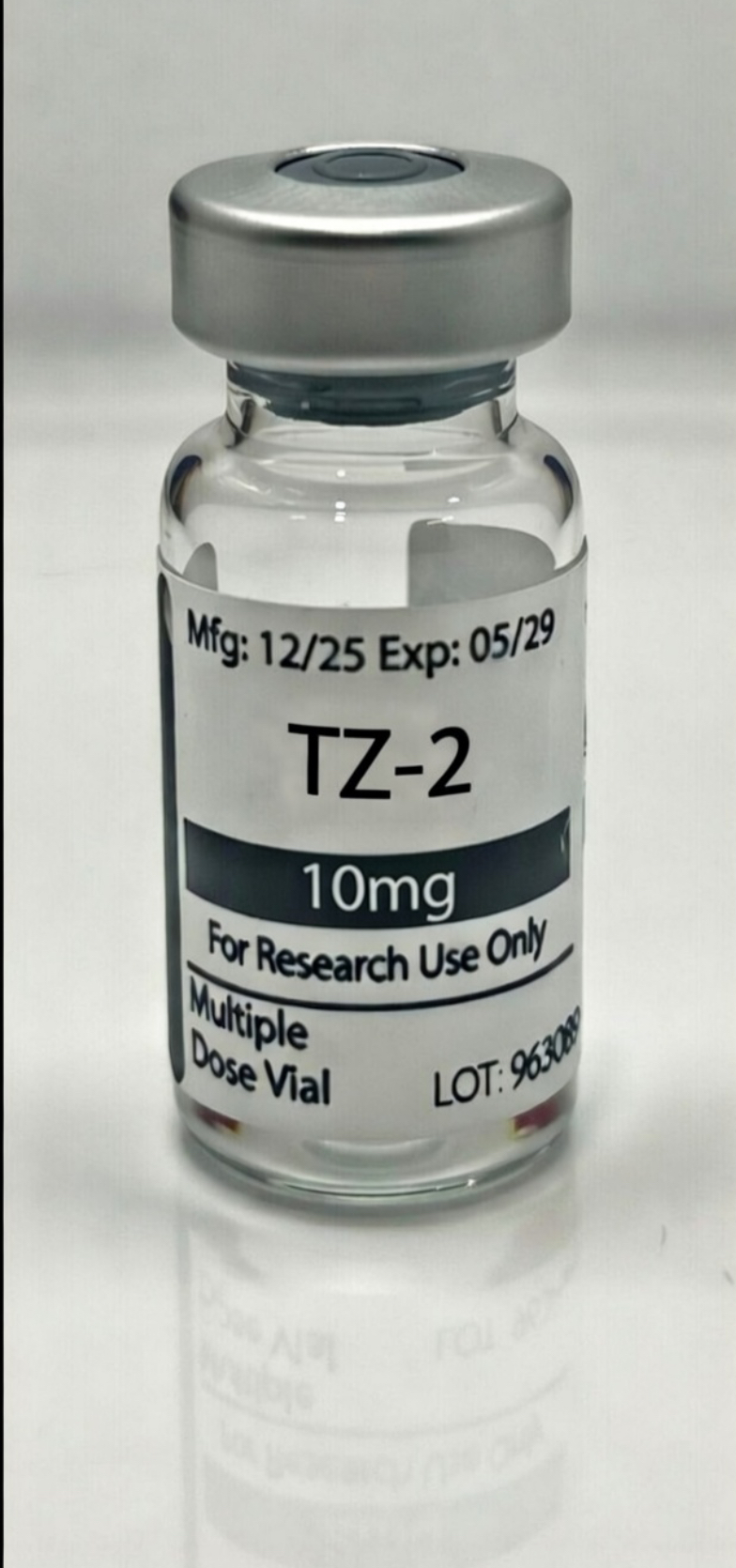
TZ-2 Peptide Vial
10mg Research Grade Solution
$40.00$30.00
Key Potential Benefits (From Clinical Trial Data)
Substantial and Sustained Weight Loss
In people with obesity/overweight (without diabetes): SURMOUNT-1 showed average reductions of ~15% (5 mg), ~19.5% (10 mg), and ~20.9% (15 mg) over 72 weeks vs. ~3% with placebo. Many achieve ≥5% (85-91%), ≥10-15% (common), and ≥20% (50-57% at higher doses).
In type 2 diabetes: SURMOUNT-2 and SURPASS trials reported ~12-15% loss (higher doses), often superior to comparators like insulin or semaglutide.
Primarily fat mass reduction, with relative preservation of lean mass; benefits sustained with continued use (regain occurs upon discontinuation, per SURMOUNT-4 post-hoc analyses).
Superior Glycemic Control (Type 2 Diabetes)
Reduces HbA1c by ~1.8-2.4% (dose-dependent; e.g., up to ~2.3-2.8% mmol/mol equivalents in some reports) over 40-72 weeks, often outperforming semaglutide, insulin, or other agents.
Lowers fasting glucose, postprandial spikes, and insulin requirements; many achieve normoglycemia or remission-like states.
Cardiovascular Protection
SURPASS-CVOT (published 2025, high-risk type 2 diabetes patients): Noninferior to dulaglutide on MACE (CV death, MI, stroke), with trends toward benefit (not superior in primary analysis, but validates CV safety/benefit profile).
Reduces predicted 10-year ASCVD risk (e.g., via ACC/AHA or PREVENT equations) in obesity/prediabetes populations (SURMOUNT-1 extensions).
Improves blood pressure (systolic reductions ~5-10 mmHg), lipids (lower triglycerides, non-HDL/LDL cholesterol; higher HDL), and inflammation markers.
Other Cardiometabolic and Quality-of-Life Benefits
Enhances lipid profiles, reduces waist circumference, and improves insulin sensitivity.
Potential for better outcomes in related conditions (e.g., emerging data on heart failure with preserved ejection fraction in Phase 3 trials).
Increases satiety/fullness, reduces food intake/appetite scores; users often report better eating control, energy, mobility, and mood.
Exploratory/early data: Reduced obesity-associated breast cancer growth in mouse models; ongoing studies in adolescents, type 1 diabetes (weight/insulin benefits without severe hypo/ketoacidosis in early Phase 2), and other areas.
These effects are amplified with diet/exercise and arise from synergistic GIP/GLP-1 actions beyond weight loss alone.